
Depth > Postcards
#06 | June 2025

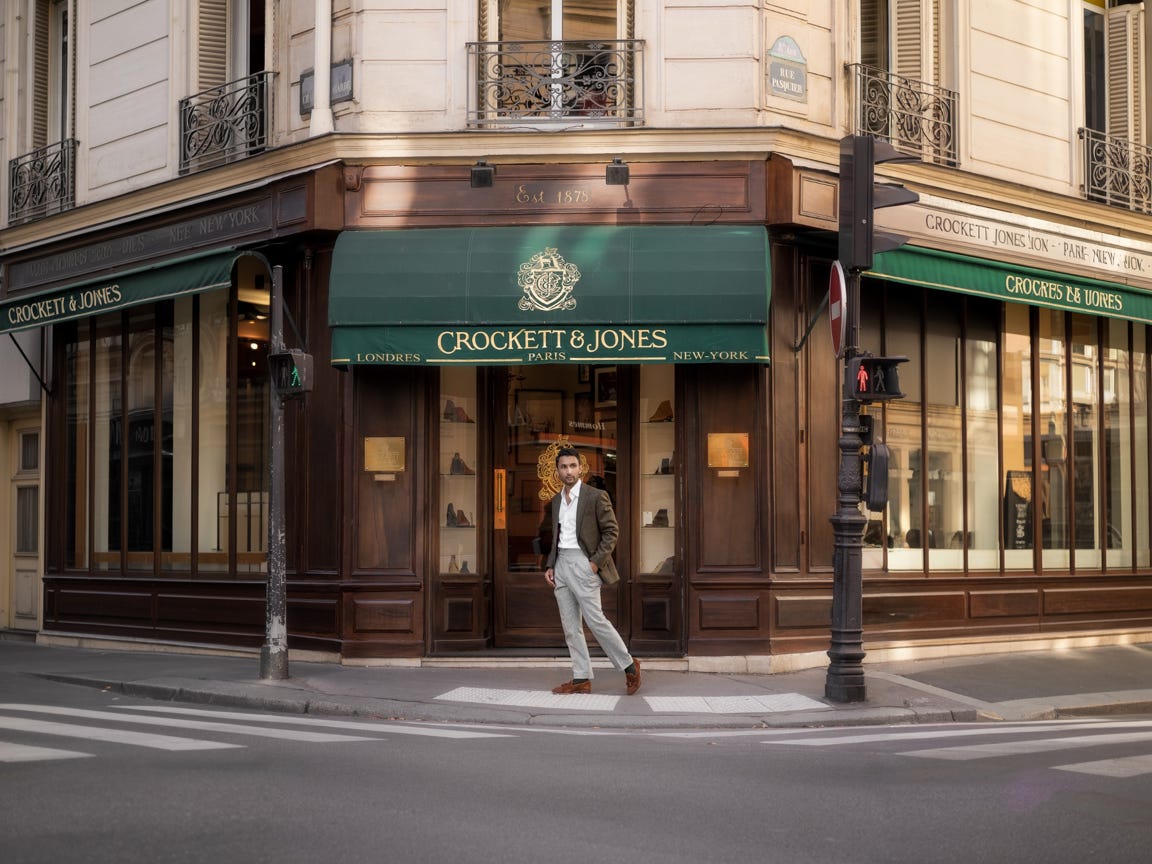
Last Month, In a Thought
Three weeks on the road, suitcase zipped and unzipped like a metronome. Every day insisted on being lived, not filed.
June moved fast.
I came home sun-tired and weirdly sharpened, like the edges of me had been honed against stone.
Travel, for me, is much more than sightseeing. It’s calibration; a way to test whether my nervous system still recognizes what it wants.
June sharpened a few truths I already suspected: some places reward reciprocity, others reward surrender. Most “travel” is performance. And the best days dissolve into ritual — a bakery line, a cable car at sunrise, a long walk where the conversation doesn’t want to end.
Paris
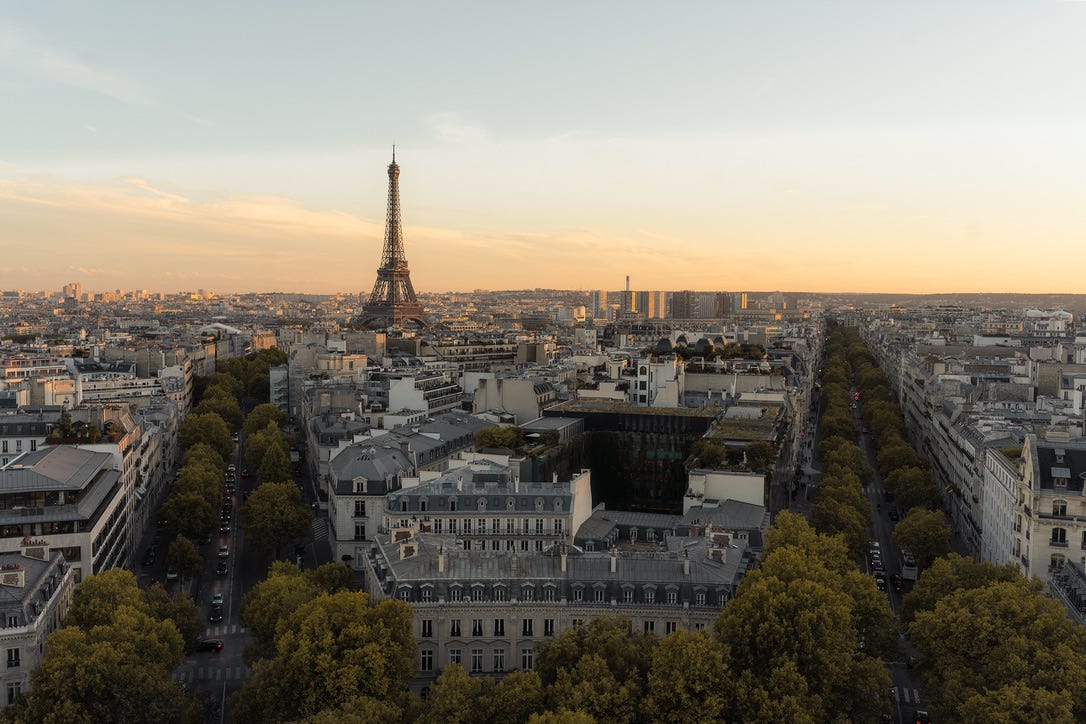
I started in Paris because my nervous system asks for it — every 2-3 years I need to touch base with the city before the withdrawal symptoms surface.
I have a similar relationship with NYC, but they hit different circuits: NYC charges me, Paris calibrates me. It occupies a corner of my soul that no other places captures.
There’s something about its particular rhythm—the unapologetic pursuit of quality, the stubborn insistence on beauty,—that feels like returning to a conversation I never wanted to end.
Mornings begin in a bakery line that smells like butter and discipline. Pain au chocolat becomes a legitimate scheduling anchor; fitness principles step aside without protest. The espresso lands exactly where it should — temperature, crema, timing — like someone tuned the moment to me.
Discernment is a civic value here — tailoring, proportion, presentation — and people notice when you’ve made an effort.
Fragrance is the same story, turned up: I can lose two hours sampling classics beside niche lines with staff who speak skin chemistry, not just brand names.
Food follows the code: bistros that don’t peacock, pastry cases arranged with restraint, lines that move because everyone already knows what they came for.
Here, quality isn’t a treat. It’s baseline.


Public space is everywhere and in use. You don’t have to hunt for it. Jardin du Luxembourg, the Tuileries, Champ de Mars, Place des Vosges — all within easy reach, all full of people reading, talking, sunning, doing nothing on purpose.
You can wander off the main street, find green chairs or a patch of grass, and sit for two hours and feel a sense of satisfcation. It’s not just that these places exist; it’s how casually people inhabit them as part of their everyday life, and how rare that feels at home.


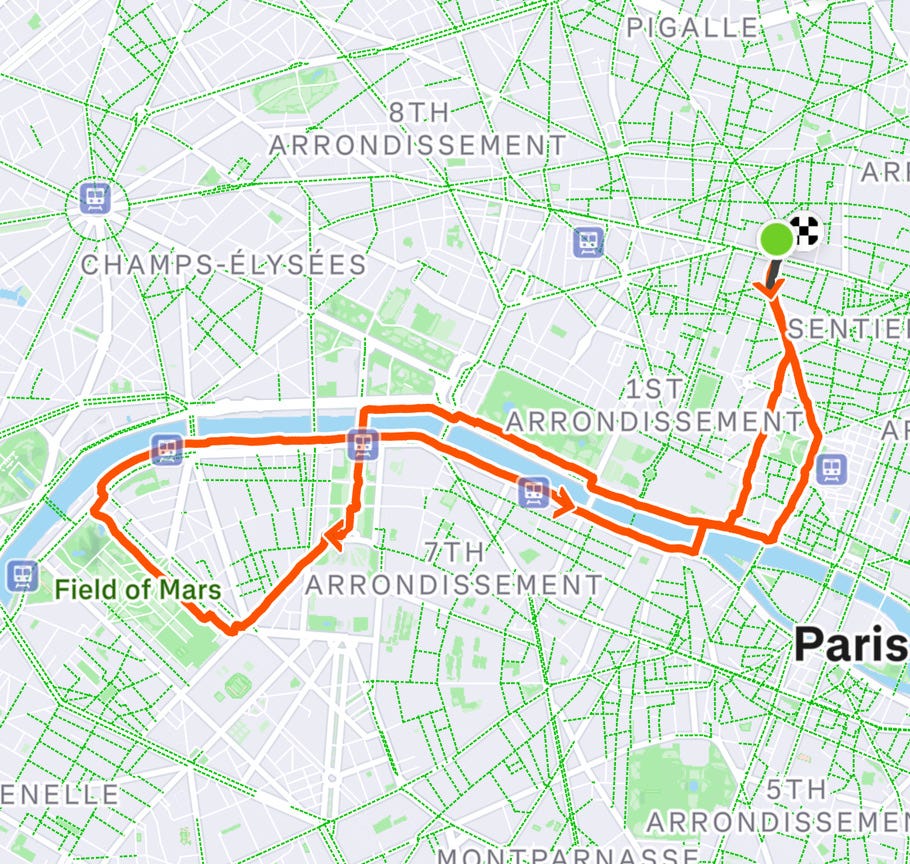
Morning runs turned the city into a conveyor belt of joy: 12–13km along the Seine, cutting past the Eiffel, looping through Champ de Mars and the Tuileries. It’s an active city — you fall in with the chorus — and distance stops feeling like effort when every kilometre delivers a view.
I want an apartment here in the future — in the 6th near the Jardin — easy reach of cafés, tailors, and the perfumeries that enable my worst (best) habits. Some days I’d drift north to the 9th/South Pigalle for its café rhythm, or the 10th along Canal Saint‑Martin when I want edges instead of polish.
Different arrondissements for different versions of me.


When it comes to Paris, people often conflate discernment with pretension. If you only met the postcard version of this city — landmarks, tourist cafés, bad meals near crowded boulevards — you didn’t meet the city.
There’s a cultural literacy test baked into everything — a proper “bonjour,” a measured question, effort in how you present yourself.
Meet its cadence and it opens; demand a performance and it withholds.
This is my fourth visit, and it won’t be my last. The city feels like a counterpoint to my soul — familiar, corrective, unhurried. For me, it offers relief: quality as baseline, beauty as discipline, taste as shared language. That’s why I keep going back; not to be impressed, but to be understood.
Switzerland
Paris calibrated me; Switzerland widened the frame. Different languages, same obsession: quality as a way of being.
One rule I live by: I don’t say “I’ve done Switzerland” (or any place). That sentence is checklist energy: collect proof, claim authority. It’s the same mentality that leads people to call Paris or London “overrated” after skimming the surface: famous spots, safe meals, a flight home. If you don’t give time, context, and effort, you didn’t experience the substance; you just passed through it.
I went to the Bernese Oberland because it’s Switzerland’s crown: absurd valleys with balcony villages perched above them. Lauterbrunnen sits in the valley — sheer walls, waterfalls — and above it, Wengen on a sunlit shelf and Mürren clinging to the opposite cliff. You reach them by cable car or cog rail, lifting you from valley floor to ledge where the world changes. It’s one of the most stunning places I’ve been
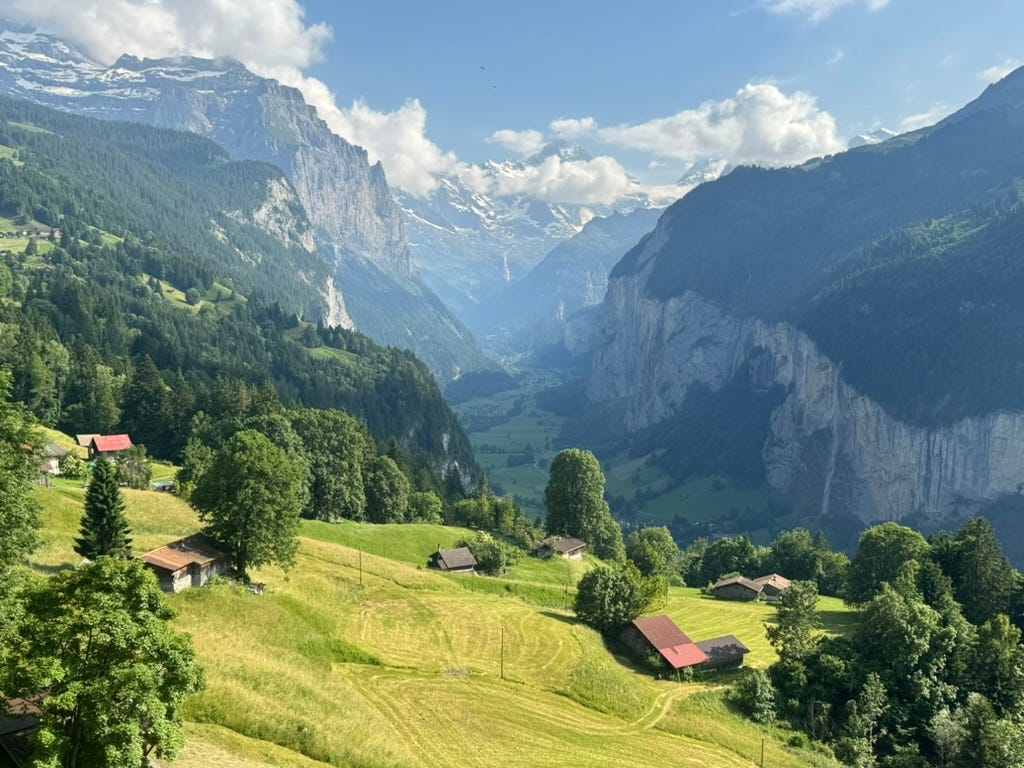
Here’s what most people do: orbit Interlaken, dip into Lauterbrunnen for a day, take the valley shot, leave. Then they say “been there, done that.” The treasure is up — cable car, altitude — then a few nights to let the place put you on its schedule.
If you stop at Interlaken/Lauterbrunnen and skip Wengen/Mürren, you miss where many of the best views and hikes originate. It’s like judging a play from the lobby — you saw the poster and the trailer, but not the performance upstairs.
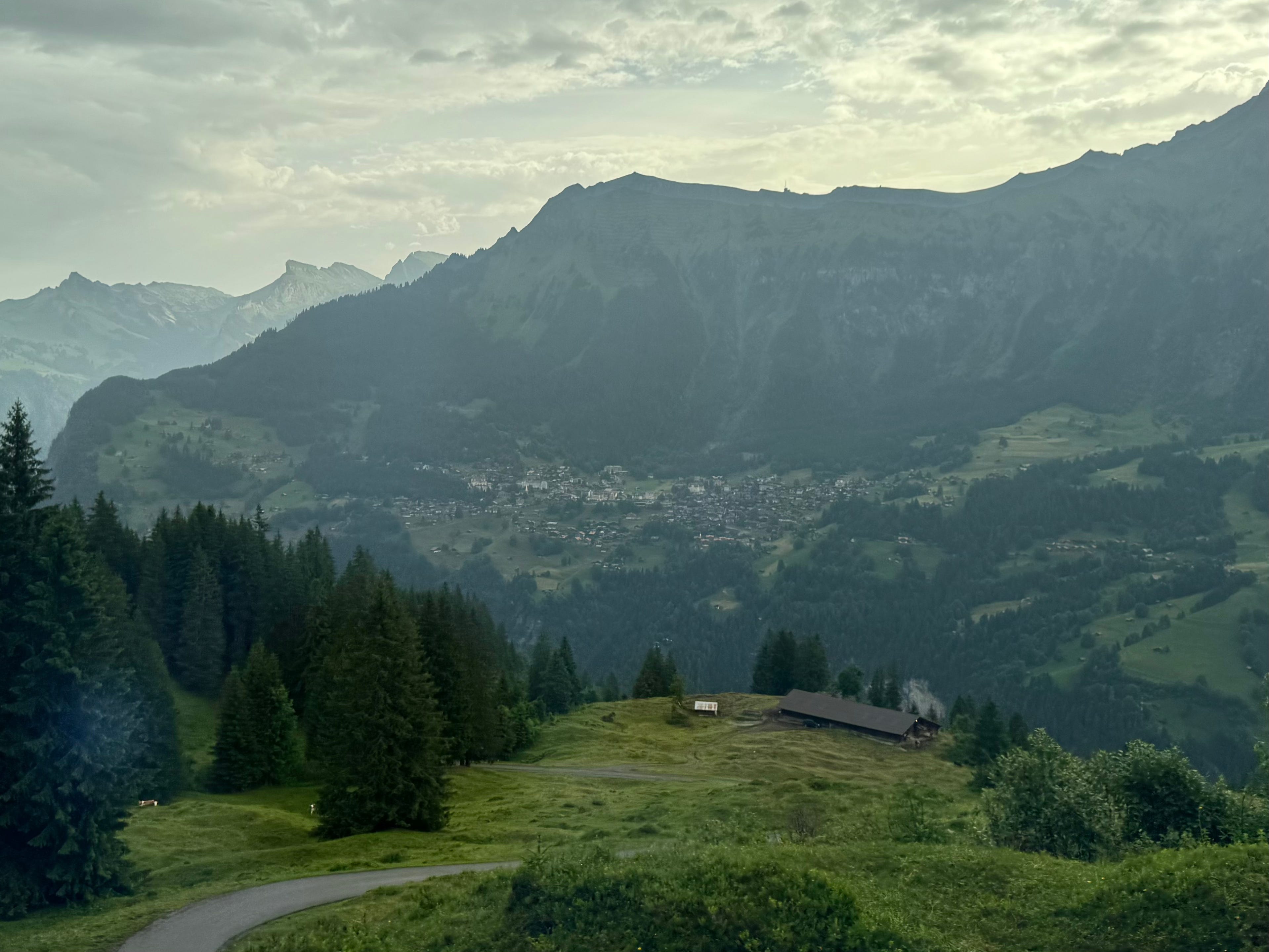
The balcony trails start from those villages, not the valley. The ridgelines that rearrange your sense of scale launch from those ledges, not the train station.
I stayed five nights. That’s when the surface becomes a life.
Evenings hush the mountains in a way daytime can’t.
Sunrise pulls edges into focus you don’t see at noon.
The hikes aren’t “routes” you tick; they’re hours where your legs negotiate with incline and your mind drops the need to narrate.
The checklist travel mentality shortchanges places. In this region, it means missing the light at both ends of the day, the balcony trails, the quiet after dinner when you hear your own pulse.
Cities are no different — meet places across neighborhoods, at multiple times of day, on repeat, with research and wandering both.
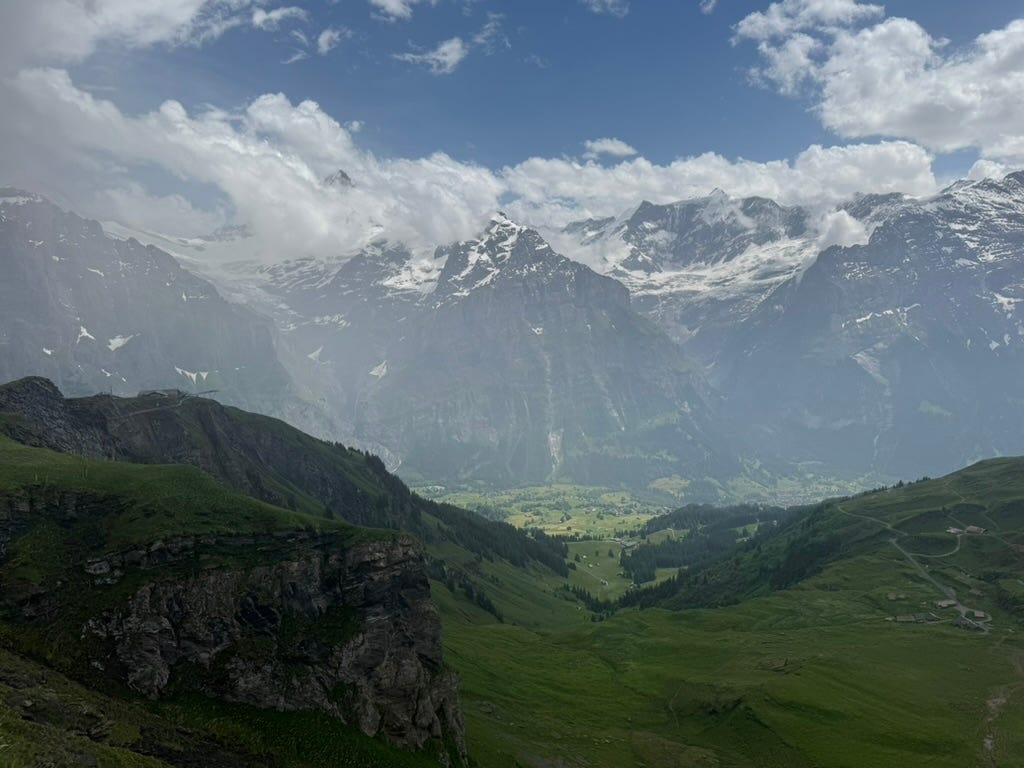
I did tons of hikes — two or three a day some days — and the camera couldn’t keep up. Phone photos won’t do it justice, but I’ll share them anyway.
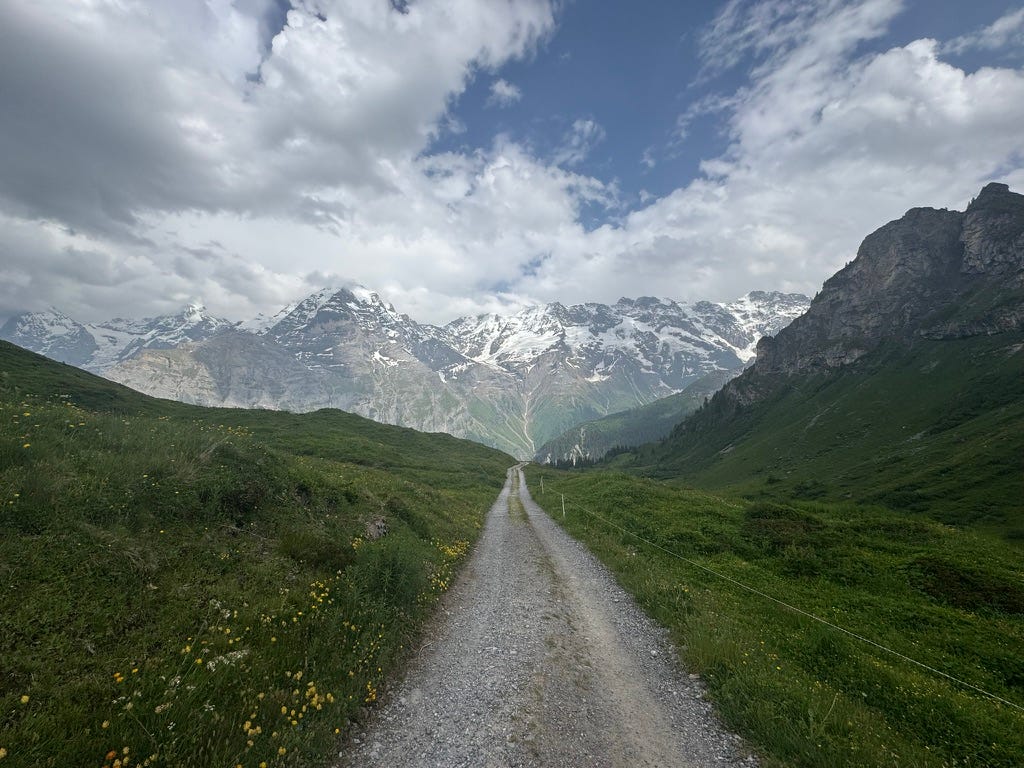
The place feels engineered for awe. You don’t capture it. You submit to it.
A quick note on food, because you know I care about it: Switzerland might have the worst food I’ve had, relative to price. It’s relentlessly mediocre and overpriced.
Locals told me they avoid restaurants in Switzerland because they’re not worth it. When a city doesn’t eat out, standards slide. You end up defaulting to burgers because viable options are sparse, and somehow three different places on three different days had widely different interpretations of a proper medium‑rare.
Beautiful country, but the culinary scene that needs a reboot.
There’s still a long list ahead. Zermatt. Engadin/St. Moritz. Appenzell/Alpstein. I haven’t scratched the surface yet, so, I’ll certainly return. Places like this don’t yield on a single visit.
The gold standard for me is simple and it applies everywhere (cities included): give a place time, effort, and context. Sleep where the rhythm lives. See it at dusk and dawn. Research hard, then wander. Don’t outsource your choices to the obvious. Otherwise, you’re near the thing without ever being in it — and that would feel like a soft prison to me.
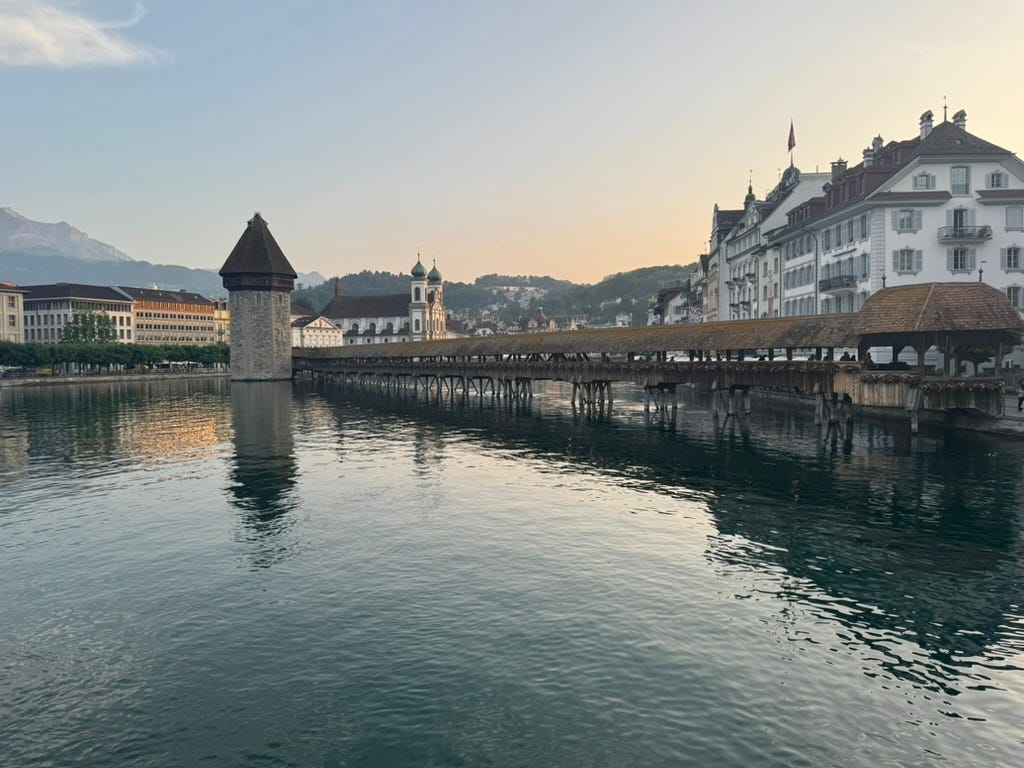
Cote D’Azur
Leaving the mountains for the riviera felt like swapping altitude for ease.
For me, Nice is the center of the Côte d’Azur — the most interesting place to be on the coast.
Nice is built for exhale. The promenade arcs along that pebble beach, sun on skin, salt in the air, a breeze that edits your thoughts.
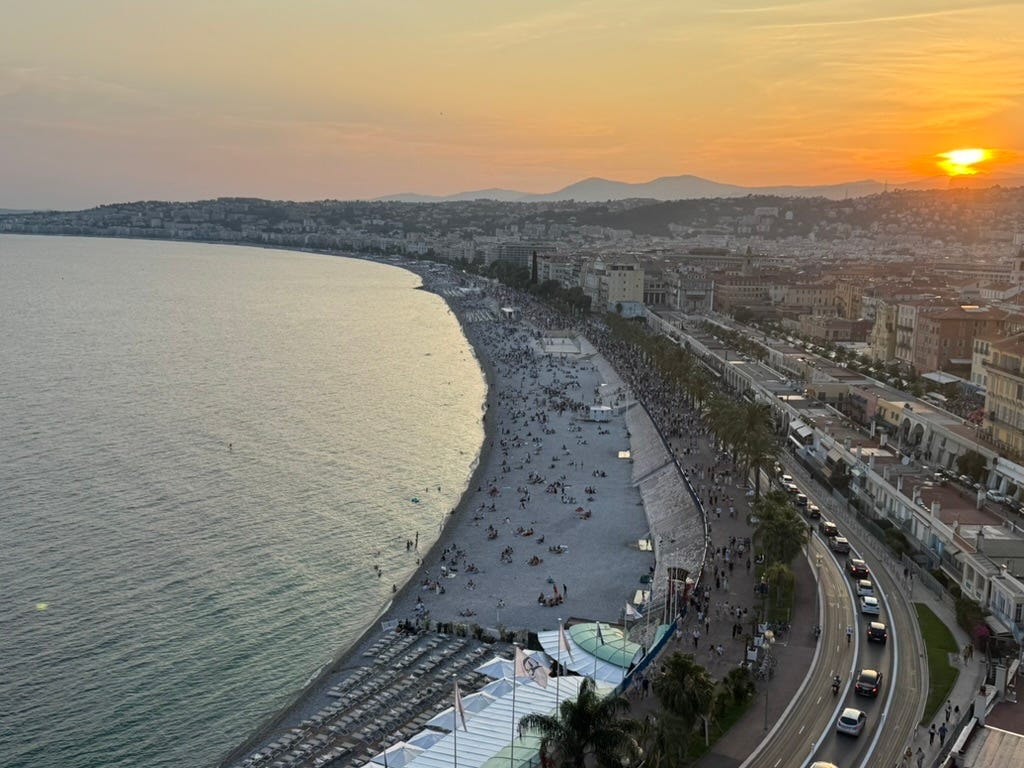
Live pop covers and small street bands drift through late afternoons. It’s calibrated for lingering: walk, sit, watch the bay, let your pace settle.
Running the promenade is its own kind of therapy. 10–12km goes down easy when each kilometer hands you sea, light, and motion.
Nice makes eating easy: proper Italian–French crossover, seafood that tastes like it arrived today, bistros that keep things clean and precise. Socca, grilled fish, restrained pastas, pastries that don’t peacock. You can eat well without hunting hard — though I still do.


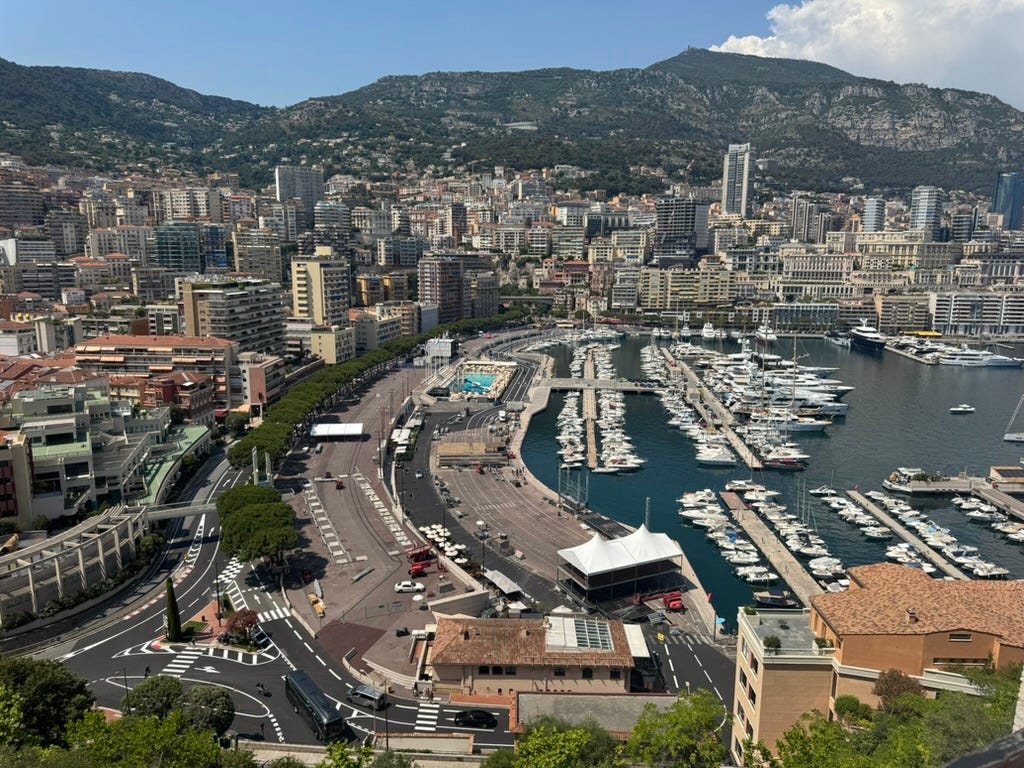
Monaco is a paradox: a micro‑state that feels like its own planet. Clean in a way that resets your baseline. Safe in a way that relaxes your posture without you noticing. Luxurious, but coherent.
Streets are immaculate
Storefronts look freshly polished
And there’s a notable quality and efficiency to how everything runs.
The luxury is explicit — supercars, yachts, marina views, glass‑and‑stone apartments with terraces catching clean light — and it shows up as an everyday baseline. But, you normalize to the higher standard fast.
Walking the F1 route I’ve watched for years felt like a religious expedition.
I always thought Monaco looked good on TV; in person, it’s better. I could live here for a season of my life. Reality check: in Monaco, $20–50M is a starter kit, so the math makes that unlikely.
Cannes
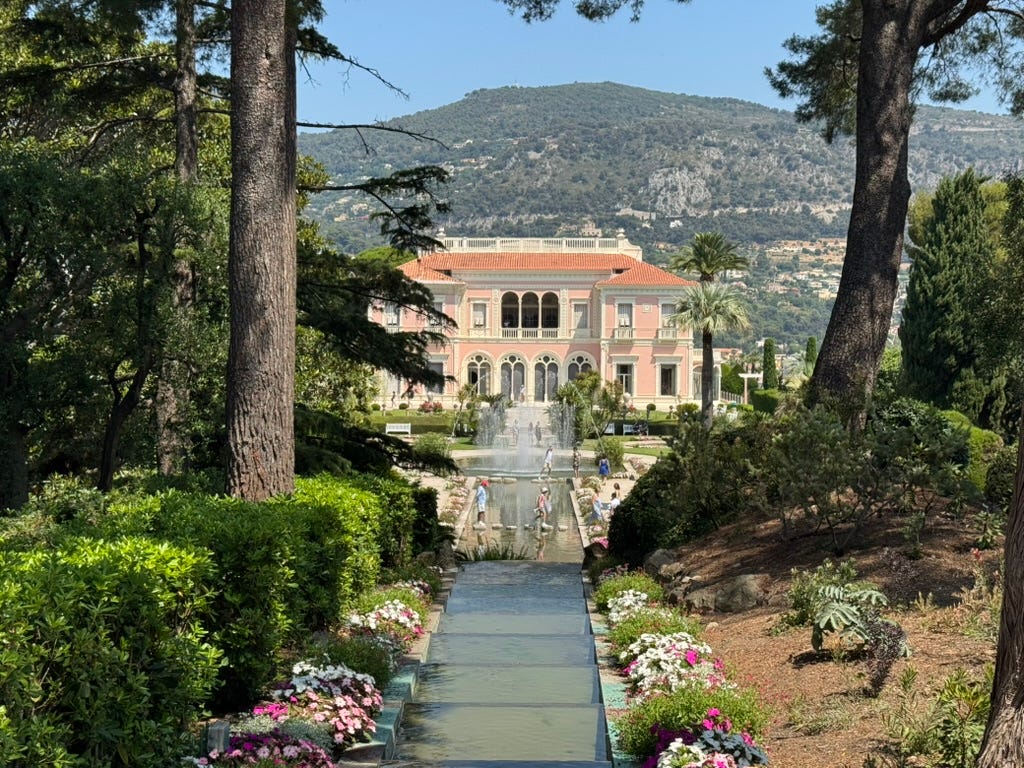
The trip closed with a longevity medicine conference in Cannes. Not because I fly across the world “for a conference,” but because the dates create a useful node to wrap a larger itinerary around.
I’ve historically avoided conferences. As a learning tool, they’re inefficient: narrow frames, recycled slides, weak evidence, too much performative posturing. You pick up a few ideas, but hour‑for‑hour, papers and long conversations with builders beat stage talks.
This year was different: I attended four conferences — Singapore, Copenhagen, NYC, and Cannes.
Why now?
Because I’m actively anchoring myself in the longevity space. It’s a domain that aligns with my values and obsessions and it’s a secular trend with long tailwinds that I’m willing to bet on. If I want to build and own a piece of this, I need to widen my vernacular and meet the people who are living and breathing in it.
And those people — especially the entrepreneurial physicians and operators — are mostly outside Canada. Our system suppresses incentives for innovation. Outside Canada, physicians build more openly and conferences become efficient convening points to meet the founders and clinicians that I won’t find at home.
My goal at these events isn’t “learning content.” It’s collision; finding the 1–2 people out of hundreds who operate on my wavelength but bring different or complementary skills. If even one relationship from a weekend becomes a long‑term collaborator or friend, the trip is worth it.
By that measure, Cannes missed. After the conference, a friend asked the only question that matters at the end: “Did you meet anyone that made you want to keep them in your life?” No. I met a few people I found interesting, but none operated on the same wavelength — different priorities, tempos, and paths — so I didn’t feel compelled to continue with anyone at a deeper level.
The redeeming moment was dinner with two friends I met at last year’s NYC conference — flawless service, food that cleared my bar, laughter that reset something in my soul. Mid‑conversation, one of them dropped the word “bugbear” — apparently just British for “pet peeve.” I heard “bunk bed,” got corrected, and kept the word.
That’s my real metric: conferences are vehicles, not destinations. Success is the conversations that spill past the schedule.
Underneath all this is a simple aim: build a life where time and money are instruments, not restraints — where flying to the South of France for three days to extend the right conversation isn’t exceptional; it’s normal. If the conference disappoints (and it usually does), one evening with the right people can still justify the flight.
Cannes didn’t deliver the collision I wanted. It did remind me what I’m optimizing for: proximity to people and places that sharpen me, and the freedom to follow my compass without asking anyone for permission.
Sweat Equity
Travel makes training noisy.
Hotel gyms (when they exist) are rarely adequate, so I default to day passes at local gyms (researched ahead) and piece together sessions wherever I can.
Running becomes city exploration — Paris and Nice make 10–13km feel like play — but time is still a constraint. Between lunch and dinner reservations, long walks, and sightseeing, carving out workouts means choosing them over something else.
I still prioritize enough volume and intensity to avoid regression. Target 4–5 training days a week, even if sessions trend lighter because travel stacks fatigue and the clock keeps me on my toes.
The goal is to come home and pick up where I left off, not claw back what I lost.
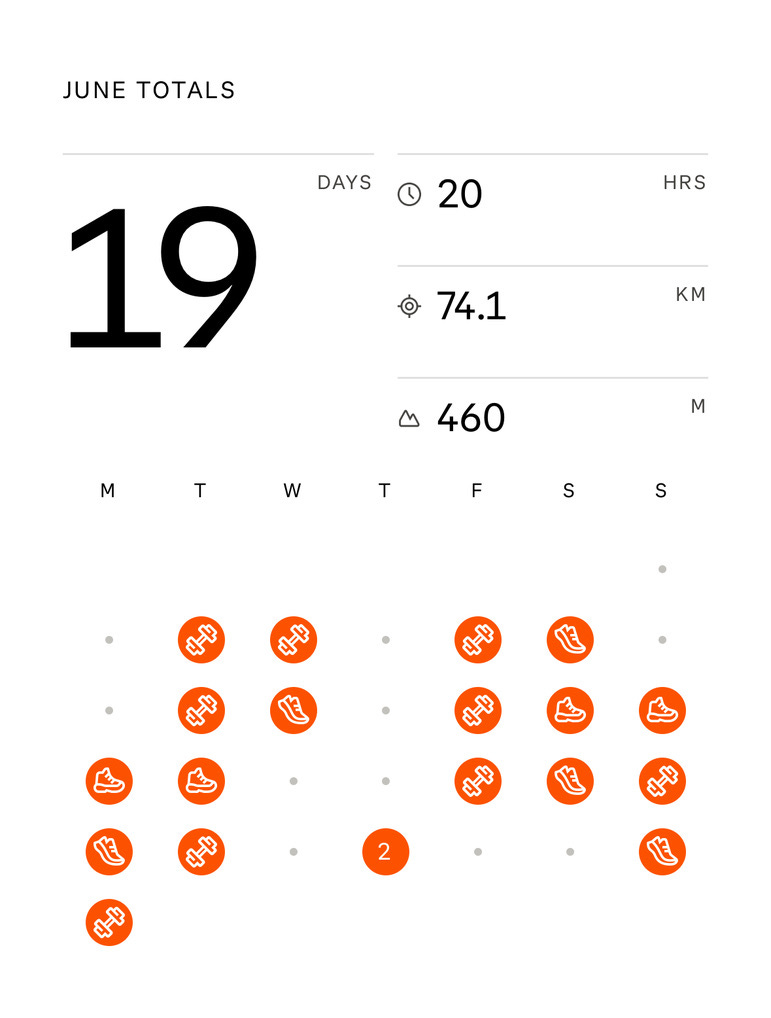
Workouts Logged: 19/30 (another subpar training month 😵)
Next Stop (Maybe)
What this month really clarified is how I want to move through the world: meet places at their cadence, not mine; choose depth over the postcard; keep taste and standards without apology; and keep enough autonomy to follow the right people and conversations wherever they happen.
June reminded me what I’m built around: standards that travel well, curiosity that demands more than the postcard, and the autonomy to follow the right people and places when they show up.
Even Cannes — a miss — clarified the design: keep proximity to the few that matter and keep enough autonomy to follow the right people and conversations wherever they happen. That’s what I’m engineering — and the only canvas I’m willing to keep painting.
Until next time,
— T
Archive
January: Unscheduled Maintenance
This reflection on travel as calibration, just like your previous insights, is realy brilliant!
Hey Tahsin, enjoyed this post, looks like you’ve been getting some terrific countries in the mix with some amazing food and scenery. Of your list I’ve only been to Paris but someday I hope to visit Switzerland.